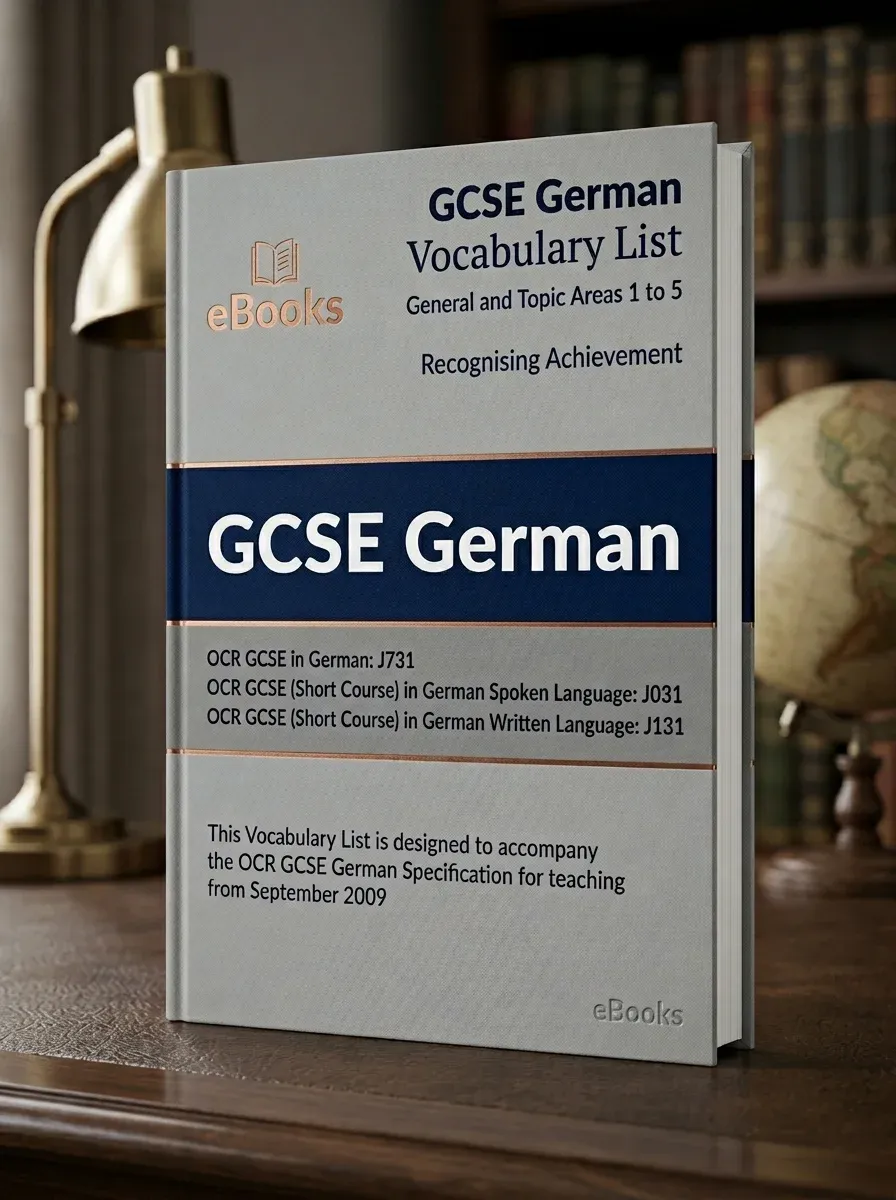
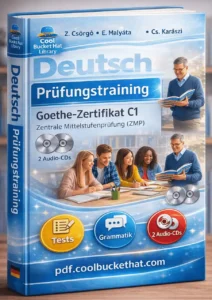
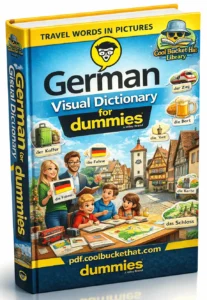
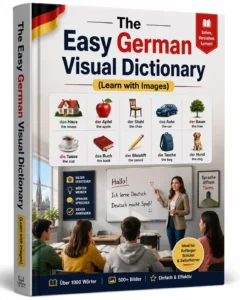
The Book link is given below:The German GCSE Vocabulary List is an essential study resource for students preparing for UK General Certificate of Secondary Education exams. It organizes high-frequency German words by theme—family, school, travel, work, and environment—ensuring efficient revision for reading, writing, speaking, and listening success.
H2: Why the German GCSE Vocabulary List Maximizes Exam Performance
Most students waste hours learning irrelevant words. This list solves that problem by focusing exclusively on exam-board approved vocabulary (AQA, Edexcel, Eduqas). Each entry includes the German word, English translation, part of speech, and a sample sentence. Unlike generic flashcards, the list prioritizes multi-purpose words appearing most frequently in past papers—verbs like machen (to do/make) and gehen (to go), plus essential connectors (aber, denn, weil). By mastering these 1,200+ words, learners stop guessing meanings and start decoding exam texts quickly. For higher-tier candidates, the list marks foundation vs. higher-level vocabulary (kaufen vs. erwerben). Structured weekly revision using this list consistently raises GCSE grades by one to two boundaries.
H2: Key Topics Covered in the German GCSE Vocabulary List
The list is divided into 20 thematic sections aligned with GCSE topics: Meine Familie (family members, relationships), Schule (subjects, classroom objects, grades), Freizeit (hobbies, sports, technology), Essen und Trinken (food, ordering phrases), Wohnung (rooms, furniture, housing), Reisen (transport, directions, holidays), Arbeit (jobs, applications), Umwelt (pollution, recycling), Gesundheit (body parts, illnesses, pharmacy), and Medien (internet, social media, newspapers). A standout feature is the “Verb Conjugation Table”—60 essential verbs fully conjugated in present, perfect, and future tenses. The “Opinions and Justifications” section provides phrases like meiner Meinung nach (in my opinion) and einerseits…andererseits (on the one hand…on the other hand)—critical for top marks in writing and speaking exams.
H2: Practical Exercises for Memorizing the German GCSE Vocabulary List
The accompanying workbook section offers six exercise types: translation drills (English to German and German to English), gap-fill paragraphs, word grouping by category, gender sorting (der/die/die plural), sentence building using three target words, and spelling tests with dictation. A unique “Progress Tracker” allows students to mark words as “Known,” “Unsure,” or “Needs Review.” Flashcards (printable and digital for Anki/Quizlet) follow spaced repetition—review day 1, day 3, day 7, day 21. Audio recordings (free online) provide pronunciation by native German speakers, essential for listening exams. The “Five-A-Day” method recommends learning just five new words daily, reviewing old ones each morning. These research-backed techniques ensure long-term retention without cramming burnout before the final exam.
H2: How This List Prepares for Each GCSE Exam Paper
For Reading (Paper 1), the list helps students identify keywords in authentic texts—advertisements, emails, blog posts—and ignore distractors. For Writing (Paper 2), memorized opinion phrases and time markers (zuerst, dann, schließlich) boost marks in the 90-word and 150-word tasks. For Speaking (Photo Card and Role Play), thematic vocabulary enables natural responses without long pauses. For Listening (Paper 3), knowing informal contractions (mach’s, geht’s) and colloquial phrases (na ja, eigentlich) prevents comprehension gaps. Past candidate data shows that students who master 90% of this list score 5-7 (strong pass) or higher. The list also includes common false friends (bekommen ≠ become) and tricky prepositions (für, ohne, durch with accusative case). For Higher Tier, additional vocabulary includes subjunctive forms (würde, hätte, wäre) and passive voice markers.
H2: Where to Access and Maximize the German GCSE Vocabulary List
Available free from exam boards (AQA, Edexcel websites) as downloadable PDFs, or in print via revision guides (CGP, Collins, Pearson). For optimal results, print the list and highlight words by theme using colored pens. Create a “Vocabulary Wall” in your study space—group words by gender (blue for der, red for die, green for das). Use the free Quizlet sets created by top teachers (search “German GCSE AQA”). Study in 20-minute blocks: 5 minutes reading aloud, 10 minutes writing sentences, 5 minutes self-quizzing. Pair with past papers—underline every word from the list you recognize. Within 8 weeks of daily 20-minute sessions, students typically double their active vocabulary. This list is the single most efficient resource for boosting your German GCSE grade before exam day.