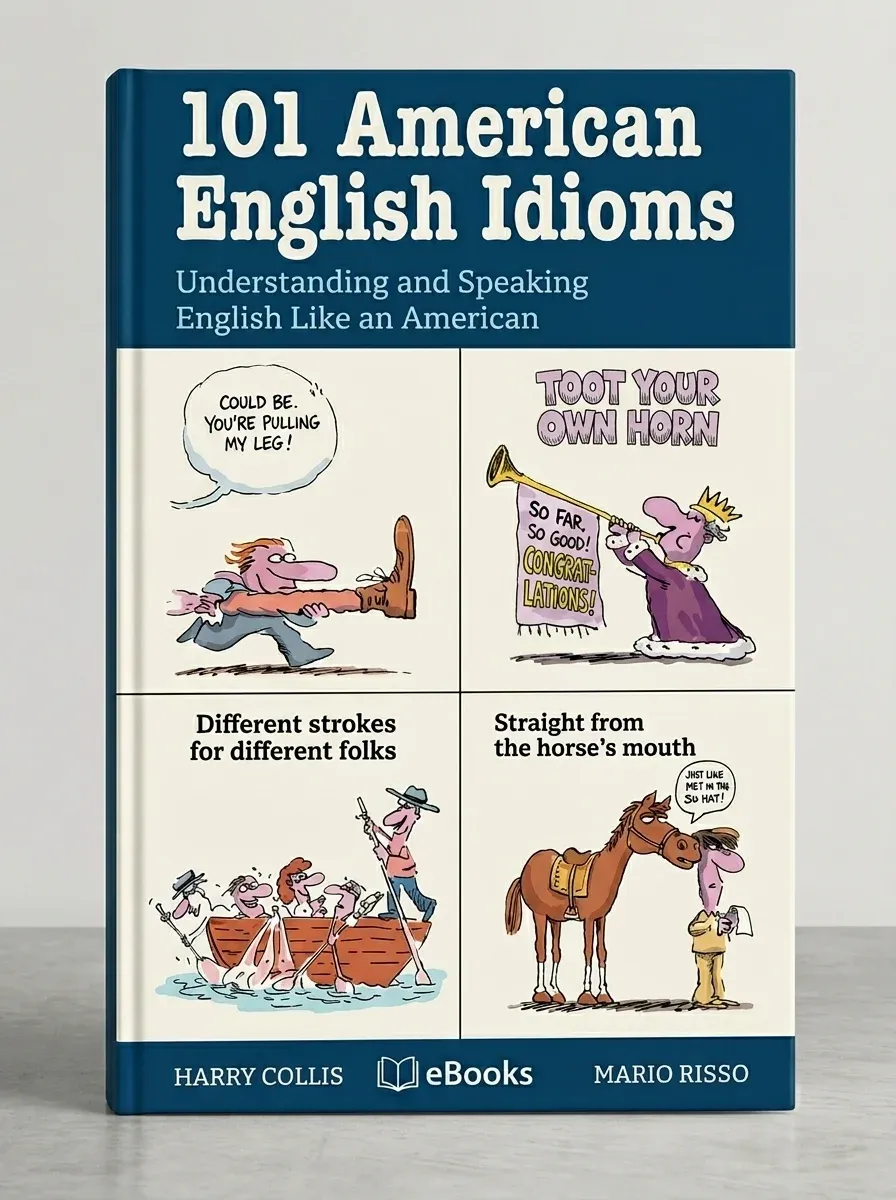
101 American English Idioms: Understanding and Speaking English Like an American is a practical guide for intermediate to advanced learners who want to sound natural in everyday U.S. conversations. It teaches common idiomatic expressions through context, humor, and real-life dialogues—moving beyond textbook English to authentic American speech.
H2: Why 101 American English Idioms Unlocks Natural Conversation
Most English courses teach literal, formal language, but Americans speak in figurative expressions. This book bridges that gap by presenting idioms exactly as they appear in daily life—at work, on TV, or among friends. Learners discover why “spill the beans” means reveal a secret and “hit the sack” means go to sleep. Unlike random idiom lists, each entry includes a humorous illustration, a short dialogue, and a clear definition. By mastering these 101 phrases, students stop sounding robotic and start understanding movies, office banter, and news commentary. For immigrants, exchange students, and professionals, this book transforms frustrating “word-for-word” confusion into confident, culturally fluent communication.
H2: Key Topics Covered in 101 American English Idioms
The book organizes idioms into thematic chapters: Everyday Situations (e.g., “call it a day”), Emotions & Reactions (“bent out of shape”), Work & Business (“cut to the chase”), Relationships (“see eye to eye”), and Slang & Informal Speech (“shoot the breeze”). Each idiom appears with a literal illustration (showing how strange it sounds literally), a contextual cartoon (demonstrating real usage), and a short fill-in-the-blank exercise. A standout feature is the “Idiom in Action” section—three example sentences from different registers (casual, professional, academic). The final review chapter groups idioms by keyword (get, have, take) and opposite meanings. By the end, learners recognize phrases like “under the weather” and “once in a blue moon” instantly, without mental translation.
H2: Practical Exercises for Retaining 101 American English Idioms
Each chapter includes four exercise types: matching idioms to definitions, completing dialogues with the correct phrase, rewriting literal sentences idiomatically, and creating original examples. The workbook provides “Conversation Simulations”—short scripts where learners insert missing idioms. Audio tracks (free online) feature native speakers using each idiom in natural, fast-paced speech, with pauses for repetition. A unique “Idiom Tracker” lets learners log when they hear or successfully use an idiom in real life. Flashcard templates (printable) include the idiom on one side and definition + example on the reverse. Spaced repetition schedules suggest reviewing 10 idioms daily. These active recall methods move idioms from passive recognition to active, automatic use in speaking and writing.
H2: How This Book Prepares for TOEFL, Work, and Social Life
While idioms rarely appear on TOEFL or IELTS listening sections directly, recognizing them prevents comprehension breakdowns during lectures and conversations. This book teaches test-takers to infer meaning from context when unfamiliar idioms arise. For workplace success, learners master phrases like “get the ball rolling” (start a project) and “think outside the box” (be creative). Socially, using idioms appropriately signals cultural integration and reduces awkwardness. Case studies show international professionals reporting fewer misunderstandings and stronger workplace relationships after completing this book. Many U.S. university orientation programs recommend it for incoming international students. By learning these 101 expressions, users move from hesitant, literal English to the relaxed, colorful speech patterns of native Americans.
H2: Where to Access and Maximize 101 American English Idioms
Available on Amazon, Barnes & Noble, and major e-book platforms (Kindle, Apple Books) in paperback and digital formats. For optimal results, study five idioms per day—review yesterday’s five before adding new ones. Use the free audio tracks on the publisher’s website; listen during commutes and repeat aloud. Create an “Idiom Jar” with slips of paper—pull one each morning and challenge yourself to use it naturally that day. Pair the book with American TV shows (e.g., Friends, The Office) and note how often these idioms appear. Within three weeks, you will recognize idioms in real time; within two months, you will use them spontaneously. This book is the fastest shortcut to sounding less like a textbook and more like an American.