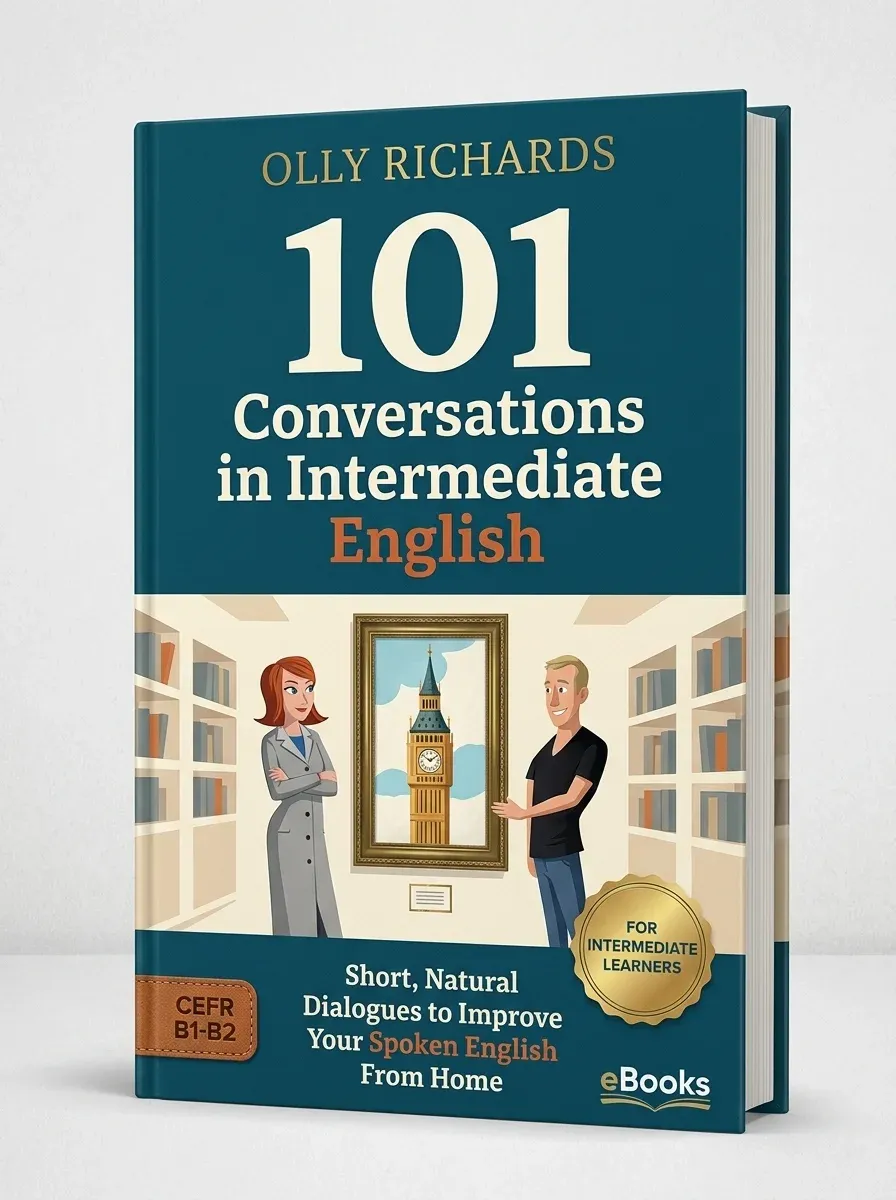
01 Conversations in Intermediate English 2020 Edition is a practical book that moves learners beyond textbook phrases into real, natural dialogue. Unlike scripted drills, these conversations mirror how native speakers actually talk—with fillers, interruptions, and everyday vocabulary. Below, five actionable strategies show how to use this resource for listening, speaking, vocabulary acquisition, fluency building, and exam preparation. Each method turns passive reading into active language growth.
The first strength of 101 Conversations in Intermediate English 2020 Edition is its authentic pacing. Each conversation includes natural features like well, um, actually, I mean and overlapping speech. Read a conversation aloud with a partner, then listen to the audio (if available) while following along. Notice how speakers pause, rephrase, and use contractions like gonna or wanna. Then, cover the text and try to shadow the recording—repeat each line immediately after hearing it. This trains your ear for real speech, not slow classroom English. Practice one conversation daily for 15 minutes.
Second, use the book to learn vocabulary in context. Each of the 101 conversations centers on a common situation—ordering coffee, returning a shirt, asking for directions. Instead of memorizing word lists, write down three new phrases per conversation. For example, from a restaurant dialogue, note I’ll go with the chicken instead of I want chicken. Then, create your own similar sentence using the same structure. 101 Conversations in Intermediate English 2020 Edition provides hundreds of such natural chunks. Review your phrase notebook weekly. You will sound more fluent without studying isolated grammar rules.
Third, turn conversations into speaking practice. Choose any dialogue from 101 Conversations in Intermediate English 2020 Edition. Read it once silently. Then, close the book and try to recreate it with a partner from memory. Do not worry about exact wording—focus on meaning. Next, change key details: different names, places, or problems. For instance, if the original is about a lost phone, make it about a lost wallet. This variation builds flexible speaking skills. The 2020 edition includes longer exchanges perfect for this transformation drill. Repeat each conversation three times with different variations.
Fourth, use the book for listening and pronunciation work. Read a conversation while recording yourself. Then compare your intonation to the model audio (available separately or via QR codes). Mark where your pitch rises for questions or falls for statements. Pay special attention to connected speech—want to becoming wanna, going to becoming gonna. 101 Conversations in Intermediate English 2020 Edition deliberately includes these reductions because they appear in 90% of daily speech. Practice one conversation per week using this record-and-compare method. After ten weeks, your natural rhythm improves noticeably.
Fifth, prepare for exams like IELTS or Cambridge B1 using the book’s question patterns. Many conversations include clarification requests (Sorry, what did you say?) and opinion questions (What do you think?). These match real exam speaking tasks. Role-play the conversations without looking at the text. Then, a partner asks you five follow-up questions based on the topic. For example, after a hotel check-in dialogue, ask Have you ever had a bad hotel experience? This extension activity bridges scripted practice and spontaneous speech. 101 Conversations in Intermediate English 2020 Edition becomes your exam preparation toolkit when used this way.