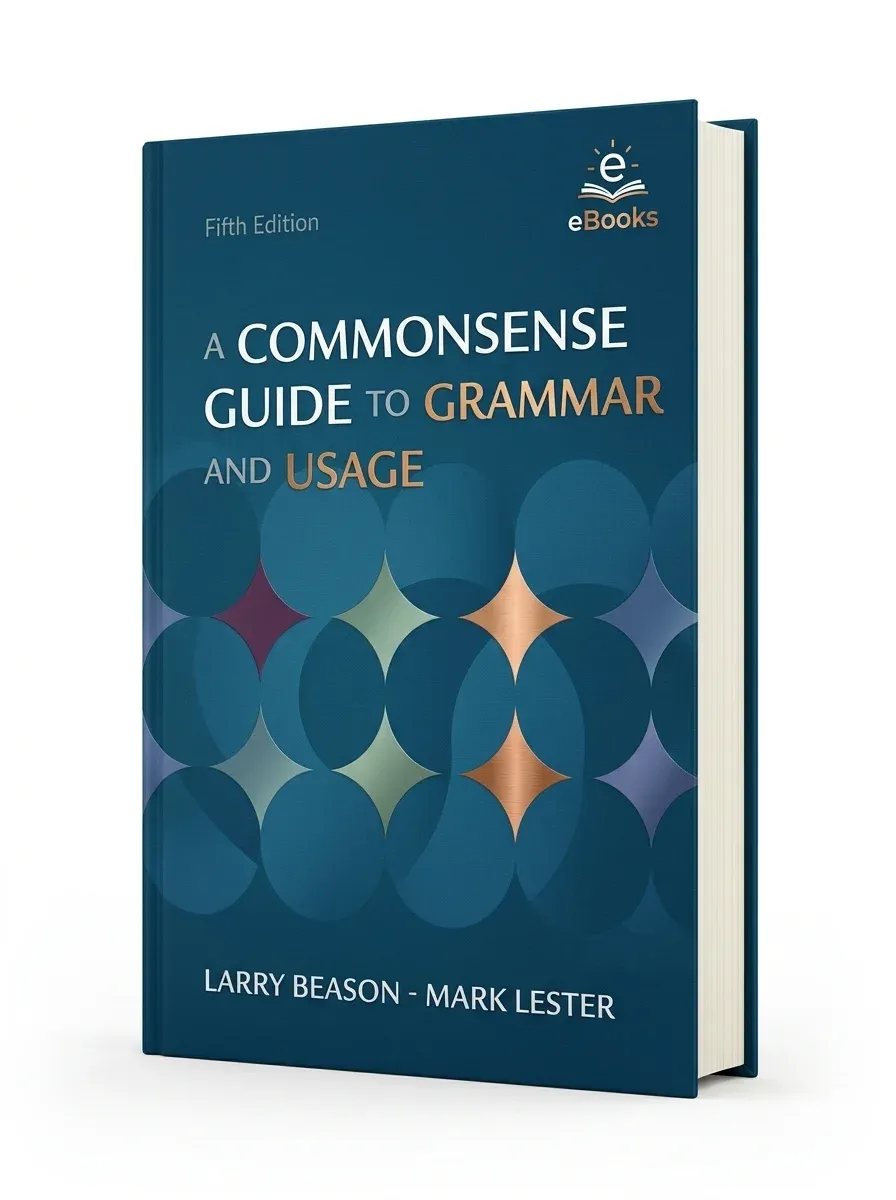
A Commonsense Guide to Grammar and Usage is a practical handbook that cuts through confusing jargon to offer clear, real-world advice on writing well. Unlike traditional textbooks, this guide focuses on why rules matter rather than simply listing them. It addresses common errors, style choices, and punctuation pitfalls with straightforward examples. Designed for students, professionals, and everyday writers, the book emphasizes clarity, consistency, and confidence. By treating grammar as a tool for effective communication rather than a set of rigid punishments, A Commonsense Guide to Grammar and Usage helps readers write with both accuracy and natural flow.
1. Why Commonsense Beats Memorizing Every Rule
A Commonsense Guide to Grammar and Usage opens by arguing that most writing problems come from overthinking, not ignorance. Instead of memorizing dozens of obscure rules, the guide teaches you to trust your ear while learning key principles. For example, you do not need to know the term “nominative absolute” to write a clear sentence. What you need is a method for spotting vague pronouns, misplaced modifiers, and mixed constructions. This commonsense approach reduces anxiety and builds practical skill. The book shows that effective grammar is mostly about consistency, logic, and reader awareness—not perfection.
2. Solving Everyday Sentence Problems
One core section of A Commonsense Guide to Grammar and Usage tackles the most frequent errors: comma splices, run-ons, and fragments. Rather than giving abstract definitions, the guide presents simple tests. To check for a fragment, ask, “Does this leave me hanging?” To fix a comma splice, try a period or a conjunction. The book also covers subject-verb agreement, pronoun case (who vs. whom), and misplaced modifiers. Each explanation includes before-and-after examples from student writing and workplace emails. The goal is not to shame mistakes but to give you reliable, repeatable fixes. This practical focus makes the guide useful for decades.
3. Punctuation Made Practical and Clear
Punctuation causes outsized fear, but A Commonsense Guide to Grammar and Usage demystifies it. The guide groups punctuation into three jobs: separating (periods, semicolons), connecting (commas with conjunctions), and clarifying (apostrophes, quotation marks). You learn the single rule for apostrophes (possession or contraction, nothing else) and the two main uses of the comma (lists and joining clauses). Semicolons are explained as “soft periods,” not mysterious symbols. Each punctuation mark comes with a commonsense test: remove it and see if confusion follows. By reducing punctuation to function rather than fancy names, the guide helps writers punctuate with confidence.
4. Choosing Words That Work for You
Beyond mechanics, A Commonsense Guide to Grammar and Usage addresses word choice and style. The guide warns against jargon, clichés, and vague nouns like “factor” or “aspect.” Instead, it encourages concrete language and active verbs. A commonsense test for any sentence: “Would you say this aloud?” If not, rewrite it. The book also covers commonly confused words (affect/effect, lay/lie) without lengthy lists, focusing instead on the few pairs that cause real trouble. Usage notes distinguish formal from informal contexts—teaching when “who” is preferred over “that,” but also when breaking a “rule” improves readability. This flexible, reader-first approach is the heart of commonsense grammar.
5. Developing Your Own Editing Checklist
The final section of A Commonsense Guide to Grammar and Usage helps you build a personalized editing routine. Instead of hunting for every possible error, you learn to find your own frequent patterns. The guide provides a short, memorable checklist: check each sentence for completeness, each verb for tense consistency, each pronoun for a clear reference, and each comma for a reason. Over time, you internalize these steps. The book also includes quick reference charts for verb forms, prepositions, and parallel structure. By ending with self-editing strategies rather than endless rules, A Commonsense Guide to Grammar and Usage turns knowledge into habit—exactly what commonsense writing requires.